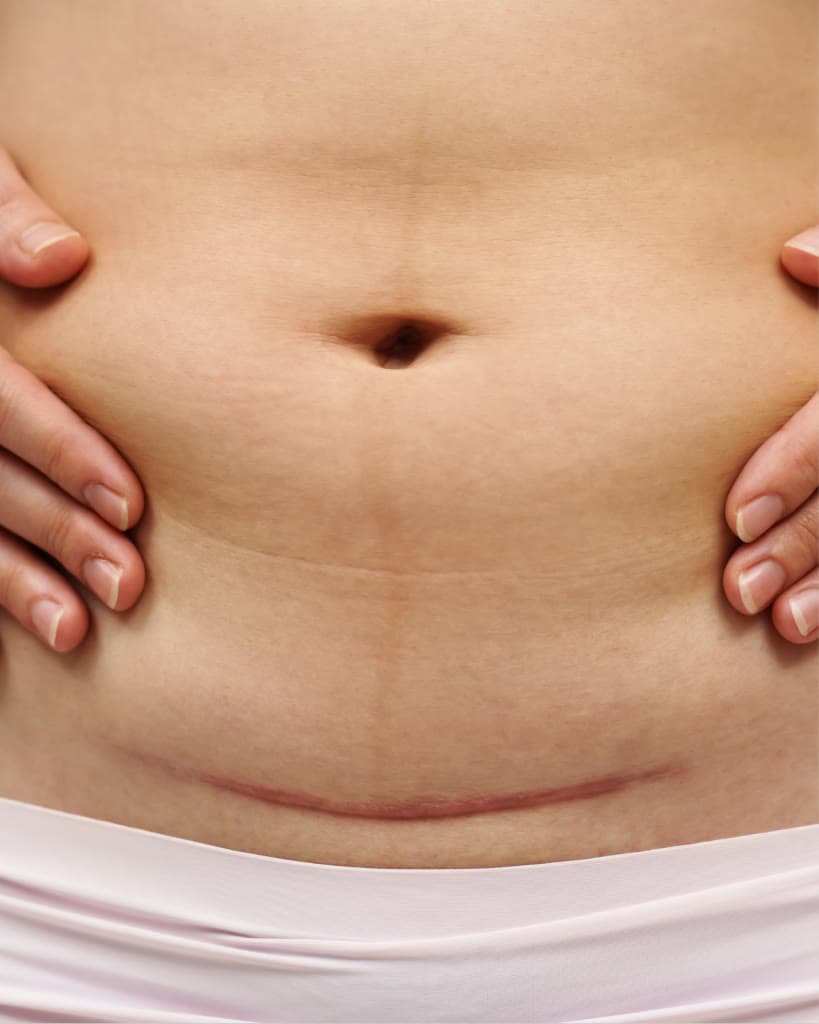
How regenerative treatment using your own growth factors can improve the appearance and texture of a C-section scar.
A C-section scar is a lasting reminder of childbirth, but for many women it also becomes a source of discomfort, tightness or self-consciousness. Whether the scar is raised, darkened or still healing years later, treatment with PRP (platelet-rich plasma) is one of the most effective, natural options available.
After a C-section, many women are left with raised or keloid scars, red, purple or pigmented tissue, tightness around the abdomen, or indented, textured scar lines that often resist creams or silicone sheets.
PRP uses growth factors from your own blood. A small sample is spun in a centrifuge to isolate platelet-rich plasma, which is injected into and around the scar to boost collagen, soften thick or raised tissue, reduce pigmentation and redness, and improve elasticity and skin quality.
A session is comfortable, discreet and medically led: a consultation and bespoke plan, a small blood draw, processing in a sterile centrifuge, then injection of the PRP into the scar — sometimes combined with microneedling. Some redness or swelling may last 24–48 hours, and a course of three to four treatments four to six weeks apart is usually recommended.
Compared with creams, laser or steroid injections, PRP is entirely natural, suitable for all skin types and low-risk for irritation, and it can be effective even on older scars. Good candidates include anyone with a scar older than three months that is raised, red, tight or visible, or who has tried other methods without success.
Interested in a treatment?
Book a consultation with Dr Alexa in Mayfair, or send us a message with any questions.